You've found a site that looks promising. Four hundred and twelve reviews, 4.6 stars, photos of pitches that look about right for the van. You nearly book. Then something nags at you. That score is an average of four hundred different trips, in four different seasons, by four hundred different people with four hundred different ideas of what "good" means. The number tells you almost nothing. The reviews underneath it might tell you everything.
What the star rating can't tell you
Most campsites with more than a hundred reviews land somewhere between 4.2 and 4.7 stars. That range is effectively meaningless. It tells you the site is not a disaster. It does not tell you whether your van will fit down the access lane, whether the pitches are level, whether the showers work in October, or whether the owner is reasonable when a ferry gets cancelled and you arrive at half past ten with a tired dog and a kid who needs the toilet.
The useful information is almost never in the star rating. It's in the sentences underneath, from the people who bothered to write more than "lovely site, will return". And most of those sentences are also noise. A review saying "beautiful location, friendly welcome, great facilities" has told you nothing you couldn't have guessed from the photos. A review saying "single-track access road with passing places, fits vans up to 6m comfortably, hardstanding pitches gravelled and level, water tap at pitch 14, midges bad after 7pm in August" has told you everything.
Green flags: the specifics that prove the reviewer actually stayed
Look for reviews that mention things a casual visitor couldn't know. These are the ones that tell you the site lived up to its photos, and the ones that tell you what the photos don't show.
Measurements and dimensions. Van length mentioned. Pitch width described. Turning circle at the entrance. Height bars on the access road. Anyone who writes "we're 6.8m and it was tight but doable" has saved you either a booking you'd regret or a cancellation fee.
Surfaces and levels. Grass, hardstanding, gravel. Flat, sloping, needs levelling blocks. "Pitch 7 slopes more than it looks" is worth more than any star rating.
Hook-up and water. Working, not working, reaches the van, needs a long lead, included or metered. "EHU at £4 a night on top" is a real piece of information. "Tap at every pitch" or "one tap shared between fifteen vans" is equally useful and equally absent from any listing description.
Facilities by month. Campsites run different operations in July and October. A review from the shoulder season saying "only one shower block open but spotless, hot water reliable" tells you what the site is actually like outside peak.
The owner. Not "friendly owners". That's noise. "Owner came out at 9pm to help us park in the rain" or "got a proper answer when we rang ahead about arriving late" tells you something about how the place runs.
The approach. The last mile before a campsite is often the problem, not the site itself. Reviews that describe the lane, the gradient, the passing places, the sat-nav misdirection. Those reviews have paid attention.
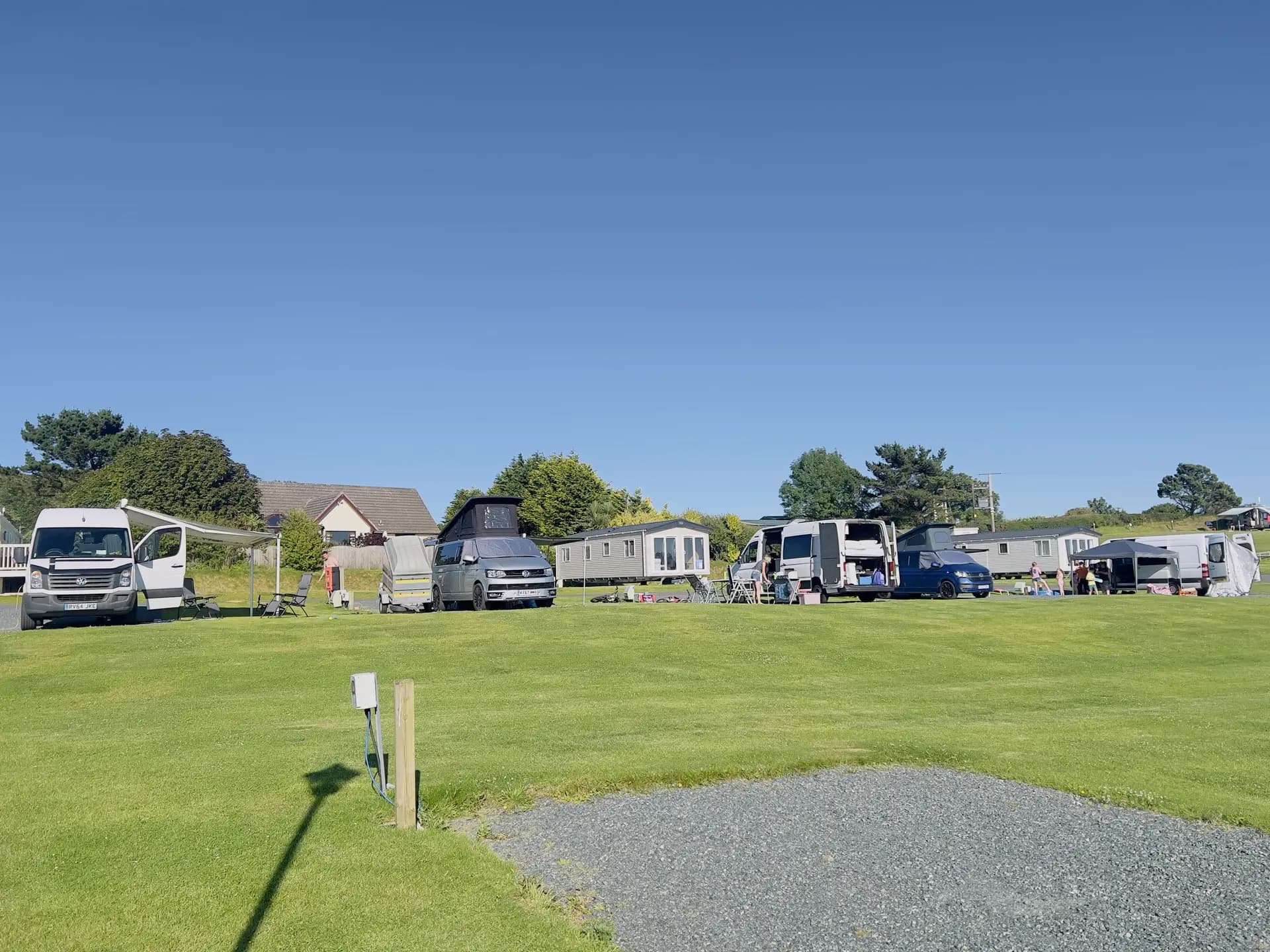
What was parked next to them. A reviewer noting "lots of motorhomes, couple of converted vans like ours, no big rigs" tells you whether the site is geared toward vans, caravans, or both. Some sites that read as motorhome-friendly turn out to be mostly touring caravans, and that changes the feel of the place even when nothing on the listing says so.
Red flags: the patterns that should make you pause
Some reviews aren't written by reviewers. Some are written by people who were going to hate the site regardless. Some are genuine warnings. Learning the difference is worth the time.
Repeated complaints about the same thing. One review saying the showers are cold is a bad day. Three reviews over twelve months saying the showers are cold is a broken boiler nobody has fixed.
Owner responses that get defensive. Everyone gets a bad review. The question is what they do with it. An owner who replies "sorry to hear that, the tap was repaired the following week" is a business. An owner who replies with a three-paragraph rebuttal accusing the reviewer of lying is telling you exactly what happens when you have a problem.
Photos that don't match the listing. If the site's own photos show rolling green pitches and reviewer photos show cars parked on gravel next to a hedge, trust the reviewer photos.
"Nice but..." patterns. When reviews consistently praise the location and qualify it with the same concern ("lovely setting but the road in is awful", "beautiful spot but the toilets are tired"), that concern is real.
Everything is five stars and says the same thing. Either the site is perfect or the reviews aren't. Human experience at a campsite produces a range. A site with a hundred reviews that all say "amazing location, lovely owners" has a review profile that looks manicured rather than lived-in.
Recency and season matter more than the average
A review from two years ago describes a different campsite. Owners change. Amenities get renovated or left to decay. The farmer next door puts in a wind turbine. Read from newest to oldest, and stop paying attention somewhere around eighteen months back.
Season matters as much as recency. A five-star review from August tells you how the site handles peak sunshine. It does not tell you whether the drainage works in November or whether the second shower block is still heated in shoulder season. If you're planning an October trip, a review from July is almost the same as no review at all.
Filter by month where the platform lets you. Where it doesn't, scan the dates. A site with brilliant July reviews and no reviews after September is a site that effectively closes in September even if the website says otherwise. The same applies to staffing. Reception manned eight to eight in summer often becomes a key-safe and a phone number from October. That's fine if you know about it. It's a problem if you arrive at half past seven expecting someone to be there.
The score is the easy part of a listing. The useful part is always further down, from the people who took the time to write a paragraph instead of a sentence. Find those reviews, read them properly, and most bookings become obvious one way or the other.
The plan you keep meaning to make.
Plan my trip£28 a year. Full refund within 14 days if you bought on the web.
Now and then, by email.
A new note when one is published, and a word when Quiet Route changes. No more than twice a month.