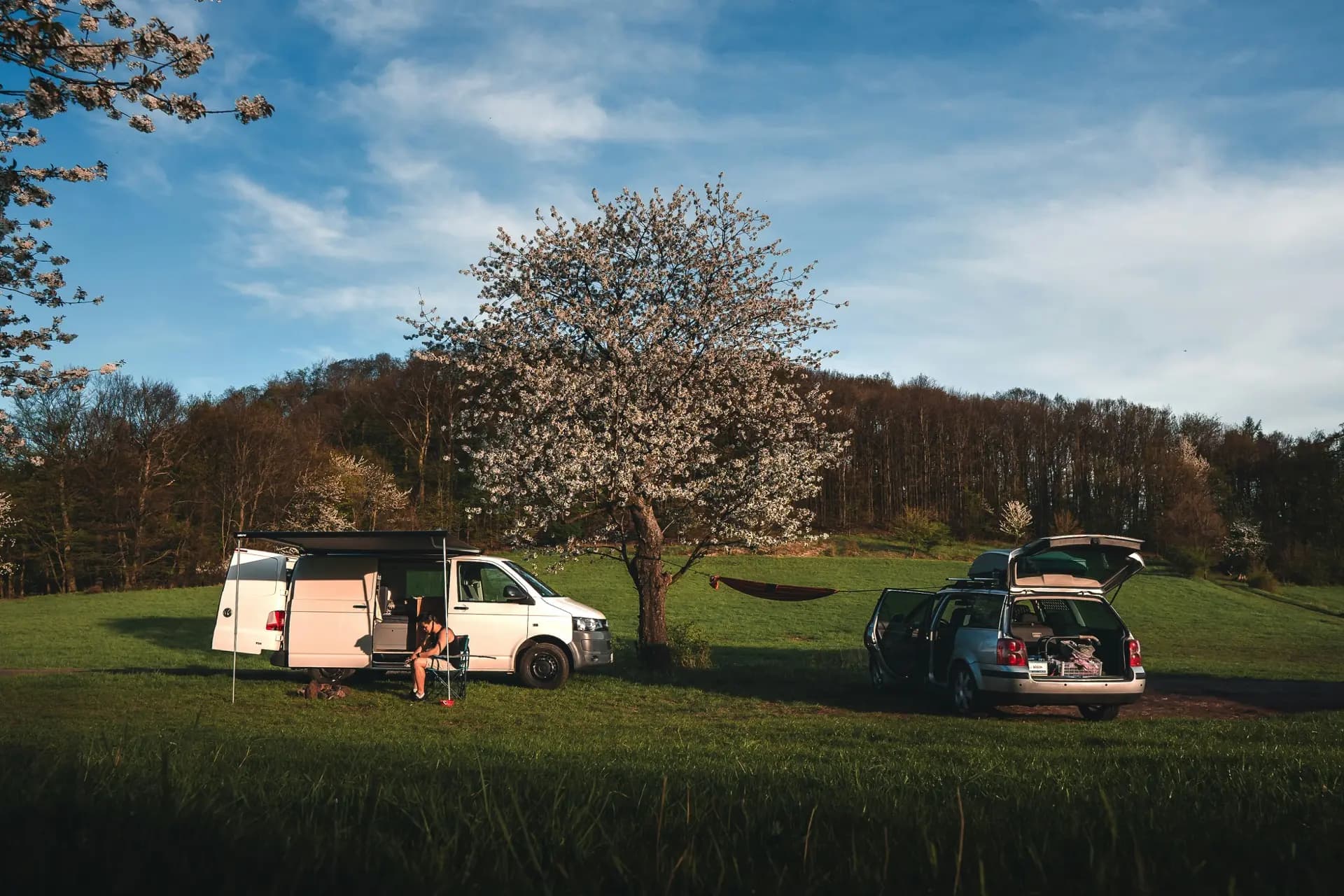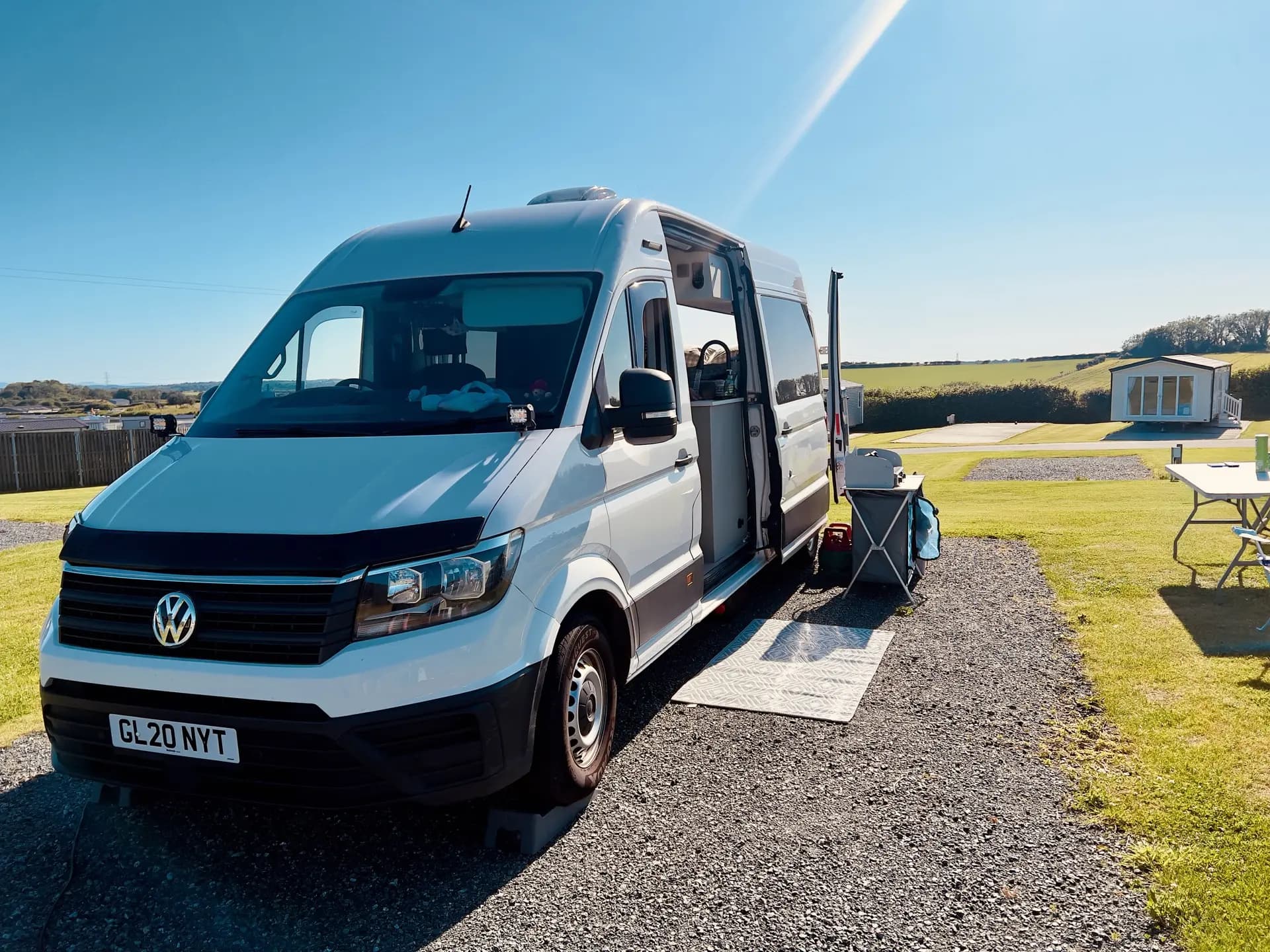
You've planned the route the way the blog posts said to: a pub stop on the way, a coastal pitch for the night, a scenic lane in for the morning. You get to the lane and the signpost reads 6'6" width, 10' height. The van is 7'6" wide and eleven feet to the top of the air con. You reverse two hundred metres between hedges, find a gateway, and start again. The advice that got you here was written for a Transporter with a pop-top. Your van isn't that.
Most campervan advice is written for smaller vans
Search "best campervan routes UK" and the same handful of suggestions come back. The NC500. The Lake District passes. The Welsh lanes. The content doesn't say it, but the routes assume a vehicle under 2.5 metres high and around 5 to 6 metres long. Once you're bigger than that, the default map changes.
The restrictions aren't a secret, they're just scattered. Height barriers at car parks. Weight limits on lanes and bridges. Length limits on ferries and campsite pitches. Low bridges on B-roads that Google Maps will route you under without flinching. The turning circle that fits a passing place for a T6 doesn't fit yours.
The trip is still doable. But the planning method most people use, and most blog posts recommend, doesn't account for the van. You either build the constraints in at the planning stage, or you find them at the barrier.
The four numbers that shape every decision
Start with the numbers. Write them down and keep them visible while planning. Height with any roof box, awning rail, or air con on top. Length with a bike rack or towed trailer. Width including mirrors. Maximum authorised mass, not just kerb weight. These are the four numbers that decide where you can and can't go.
Then work the route against them.
Height. Google and Apple Maps don't know your van. Use a truck-routing app like CoPilot Truck, Sygic Truck, or Waze with the vehicle dimensions set. None of them are perfect. Cross-check low bridges against the Network Rail bridge strike map and local council pages. Car park height barriers are worth checking before you arrive at a stop, not after. National Trust and heritage sites tend to post them. Supermarket car parks with clearance over 2.1 metres are rare.
Length and turning. If a route is rated for a public service vehicle, a coach has made the turn. That's a useful proxy. If the lane has no bus route and no passing places marked, assume you won't get through cleanly. Single-track with passing places is manageable in a sub-6-metre van. Over that, you're reversing a long way when you meet something coming the other way.
Weight. Weight limit signs on bridges and lanes are usually written in tonnes. A 7.5t restriction includes you if you're over 7.5 tonnes MAM, even if you're lighter loaded that day. Don't cross and hope. Reroute. Weak bridges are common on older routes and in rural Wales, the Dales, and the South West.
Ferries. Every UK ferry company prices by length and height and they all have maximums. Caledonian MacBrayne, Wightlink, Red Funnel, Stena, and P&O all publish vehicle dimension caps. Book by actual measurements, not the model name on the V5. An 8-metre van at 8.1 metres gets turned away at the ramp.
Campsites. Club sites (Caravan and Motorhome Club, Camping and Caravanning Club) list maximum vehicle length on each pitch. Independent sites are less consistent. Phone and ask if the listing doesn't say. A 7.5-metre pitch with awning space behind doesn't help a 9-metre motorhome.
Regions that work better for larger vehicles
Not every part of the country is hostile to a big van. The distinction that matters isn't north or south, it's the road network underneath.
Flat coastal counties with A-road spines are the easiest. Lincolnshire, Norfolk, Suffolk, East Yorkshire, the South Coast from Kent to Dorset, the Fens. You can stay on trunk roads most of the way and pull into sites that were built for larger vehicles.
Scotland is mixed. The east coast and the A9 corridor are fine. Argyll and the Highlands have the famous routes but also the worst pinch points, single-track sections, and small car park barriers. The NC500 in particular runs on roads that weren't built for big vehicles, and has got harder for motorhomes in summer as the traffic has grown. A loop that stays on the A9 and A96 and uses day trips for the scenery is the version that works in a big van.
Wales depends on the valley. The A55 along the north coast is straightforward. Most B-roads in Snowdonia and the lanes into Pembrokeshire are not. The version that works is the trunk network for the van and the smaller stuff explored on foot, by bike, or on the local bus.
Abroad, the continental aires network was built for larger vehicles. French aires, German Stellplätze, Spanish áreas de servicio: length and height allowances are generally more generous than a UK rural campsite. If you're travelling in a 7 to 9 metre van and the budget and ferry timing allow, France and Germany are often easier to plan than the Highlands.
The trip that works in a 9-metre van is a different trip from the one the blog posts describe. Coast roads, trunk routes, aires in France, sites built for larger vehicles - plan around that network and the van stops being the problem.
The plan you keep meaning to make.
Plan my trip£28 a year. Full refund within 14 days if you bought on the web.
Now and then, by email.
A new note when one is published, and a word when Quiet Route changes. No more than twice a month.