You've got the week off. The van's ready. You sit down to price it out and the numbers won't settle. One forum says £30 a night, another says £50. Fuel is "a lot" or "not too bad" depending on who you ask. Food is whatever you make it. You close the tab and go back to vaguely thinking it'll be fine.
It will be fine. But "fine" covers a wide range. A week on the road in the UK can cost £500 or £1,500 without either being wrong. The difference is mostly in how you travel, not where.
The budget question isn't one question
Most cost guides give you a single number, and that single number either flatters the trip or scares you off it. Neither helps when you're trying to work out whether this specific trip, in this specific van, for this specific week, is something you can afford.
Six lines matter: pitches, fuel, food, ferries and tolls, attractions, and the small stuff that adds up. Each one has a low end and a high end. Where you land on each depends on choices that have nothing to do with the quality of the trip.
A couple in a small van wild-pitching where they can, cooking every meal, driving short hops, will spend a fraction of what a family in a six-berth on fully serviced sites with a ferry crossing to the Isle of Wight will spend. Both are doing a UK campervan holiday. Both can be brilliant. The numbers just aren't the same number.
Pitches
The biggest swing, and the easiest to control.
Free or near-free. Certified Locations (the Caravan and Motorhome Club's five-van sites), Britstops, and legitimate wild pitches in parts of Scotland under the Scottish Outdoor Access Code. Typical cost: £0 to £15 a night. You lose hookup, sometimes showers, sometimes both. You gain quiet and flexibility.
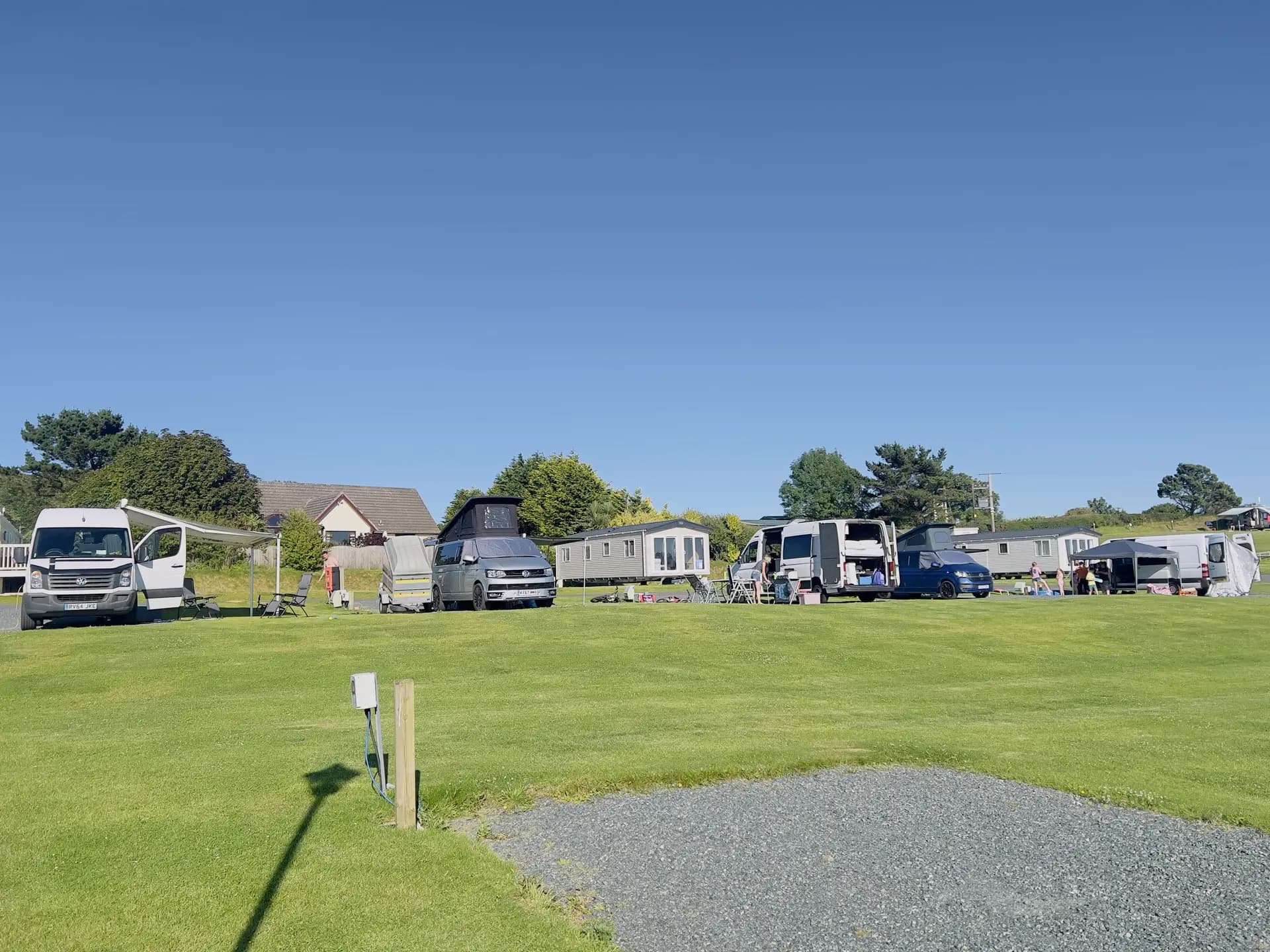
Standard touring sites. Club sites, farm sites, small independent places. Usually £25-40 a night for two adults with electric hookup in season. Off-season the same site might be £18-25. These are the backbone of most UK trips.
Premium and holiday parks. Full facilities, sometimes a pool, sometimes entertainment. £45-70 a night, occasionally more in August. Worth it when you're travelling with kids who need a playground. Overkill if you're just sleeping.
Mix them and the average comes down fast. Two cheap nights, two standard, two with hookup and a hot shower because you need one. A seven-night trip at a blended £25-30 average is realistic. At a blended £45 average you're doing something closer to a holiday park week.
Fuel
The line that depends most on the van and least on your choices.
A typical UK campervan returns somewhere between 25 and 35 mpg. Big motorhomes can drop to 20-25. Small converted vans can nudge 40. Diesel pump prices in the UK have been moving around for the last few years; treat anything you read online as approximate and check the day you leave.
The useful planning trick: multiply your total trip mileage by your cost per mile, not your cost per tank. A van doing 28 mpg at current UK diesel prices works out to roughly 22-28p per mile. A 600-mile trip is therefore somewhere in the £130-170 bracket. A 1,500-mile blast round Scotland is closer to £330-420.
Short-hop trips save real money here. Two bases over a week, with day trips out and back, can halve your fuel bill compared to a different pitch every night.
Food
The most flexible line of the lot.
A van kitchen that gets used properly runs roughly what food costs you at home, which for two people is usually £50-80 a week of groceries. Porridge in the morning, sandwiches or a cooked lunch, something simple off the hob at night. Add a supermarket top-up mid-trip for fresh stuff.
A van kitchen that gets used once means eating out, and eating out on a trip adds up quickly. A pub lunch for two is £25-40. A proper dinner is £50-80. A chippy is £12-20. Three pub meals in a week can double your food spend without you really noticing.
Most people do a mix. Breakfast and lunch in the van, dinner out two or three times, the rest cooked. A realistic food budget for two on a week's trip is £120-200 all in, depending on how often you sit down in a pub.
Ferries, tolls, parking
The lumpy costs that catch people out.
Ferries matter if you're going to the islands. Calmac's Scottish routes to Mull, Skye (via Mallaig), Arran, the Outer Hebrides. Isle of Wight crossings. Ferries to Ireland or France. A vehicle-and-two-passengers return to Mull is around £40-70 depending on season and length. A longer crossing to Lewis or Harris can run £100-200. Check the operator's site for the day you want. Fares vary a lot by season and day of week.
Tolls are rarer in the UK but exist. The Dartford Crossing, the Mersey Gateway, a handful of bridges. Call it £10-20 across a typical trip unless you're crossing the Channel.
Parking is the quiet one. Honesty boxes at beauty spots are £3-8 for the day. National Trust car parks are free if you're a member and £6-12 if not. City parking in a van is its own problem. Some urban car parks can't accommodate you, and the ones that can charge £15-25 a day. Plan to avoid big cities with the van where you can.
Attractions and what you actually do
This is the line you have the most control over and probably won't bother tracking.
Castles, gardens, distillery tours, museums, boat trips. Individual entry runs £8-20 per adult at most places. A family of four can spend £50-70 on a single attraction. National Trust, English Heritage, Historic Environment Scotland memberships pay for themselves inside a fortnight if you're visiting more than a couple of their sites.
A realistic attractions budget for a week is £50-150 for two adults, more with kids. Many of the best bits of a UK trip are free anyway. Beaches, hill walks, harbour towns, the light on Rannoch Moor when the clouds break. Budget for a few paid visits and let the rest be the trip.
What a week actually looks like
Two ballparks, both honest.
The lean week. Small van, two people, a mix of CLs and one paid site. Home-cooked food, one pub meal, a couple of free beauty spots, one paid attraction. Roughly: £80-120 pitches, £100-150 fuel, £120-150 food, £20-40 parking and bits, £15-30 attractions. Total: £350-500.
The comfortable week. Mid-size van, two people, a mix of standard touring sites with hookup. Cooking most meals, eating out three times, a ferry to Mull, two paid attractions. Roughly: £200-260 pitches, £180-250 fuel, £180-220 food, £60-80 ferry, £40-60 parking and bits, £40-60 attractions. Total: £700-950.
The full week. Family of four, bigger van, holiday park with facilities, eating out often, a couple of big attractions. Roughly: £350-450 pitches, £220-300 fuel, £280-380 food, £50-120 parking and crossings, £120-200 attractions. Total: £1,000-1,500.
All three are real trips. The family paying £1,400 isn't doing it wrong. Neither is the couple who come back with change from £400. Different shapes, same country.
Where Quiet Route fits
The budget field on Quiet Route is there because budget shapes the trip, not the other way round. You put in a figure, and the plan comes back with pitches, regions, and a pace that fit it. A tight budget means more free overnights and shorter driving days. A comfortable one opens up sites with hookup, a ferry, a couple of attractions you'd otherwise skip.
You don't have to calculate any of this before you start. Put in what you're happy to spend, and the plan works backwards from there.
The week that worries you on paper is almost always the week that works out. The numbers settle once you stop treating them as a single number.
The plan you keep meaning to make.
Plan my trip£28 a year. Full refund within 14 days if you bought on the web.
Now and then, by email.
A new note when one is published, and a word when Quiet Route changes. No more than twice a month.